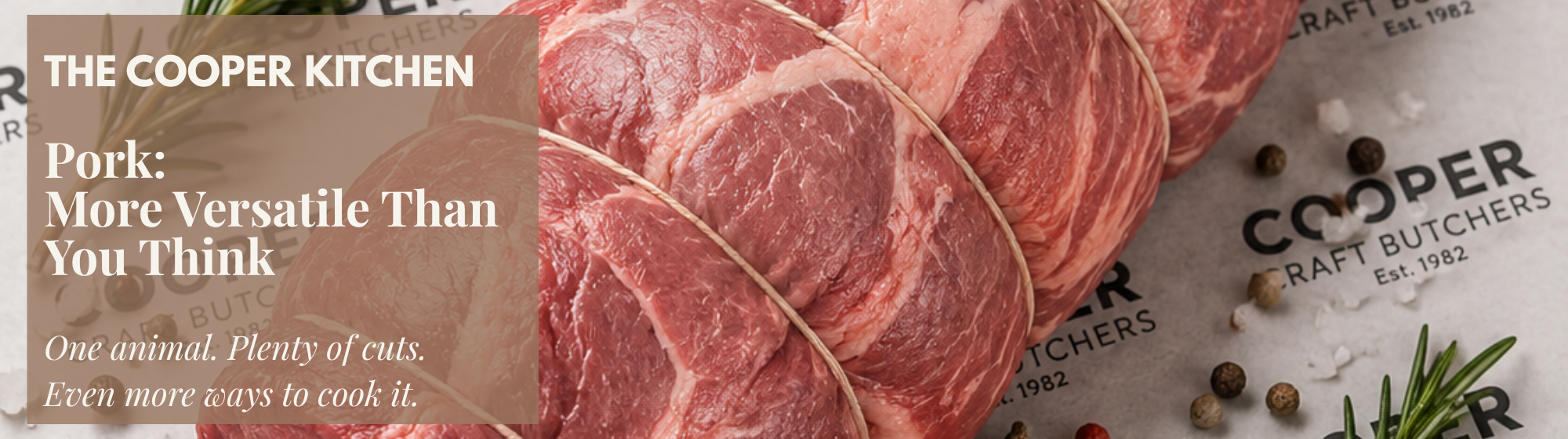
Pork: More Versatile Than You Think
One animal. Plenty of cuts. Even more ways to cook it.
There’s More to Pork Than Chops
October is Porktober, so throughout the month in The Cooper Kitchen we’re going to be taking a closer look at pork — the cuts, the cooking and some of the butcher’s knowledge that can help you get more from it at home.
And there’s plenty to talk about.
Ask someone to name a pork cut and chances are chops, sausages or bacon will be somewhere near the top of the list. They’re popular for good reason, but they’re only a small part of what pork has to offer.
There’s loin and fillet for quicker cooking, belly with its layers of meat and fat, shoulder that becomes beautifully tender given enough time, ribs, leg, collar — and plenty in between.
The important thing is that they don’t all want to be cooked in the same way.
A cut that works brilliantly for a quick midweek dinner might not be the one you choose for several hours in the oven. And some of the cuts that need a little more time can give you fantastic flavour and tenderness.
That’s where knowing your cuts comes in.
So to start Porktober, we’re going back to basics: which cuts come from where, what makes them different and, most importantly, what should you actually do with them?
Because sometimes choosing the right piece of pork is half the job done.
Which Cut for Which Job?
One of the best things about pork is just how many different ways you can cook it. The trick is choosing a cut that suits what you want to make.
For quick cooking
Pork loin is where you’ll find familiar chops and steaks. It’s relatively lean, tender and ideal when you want something that can be cooked quickly in a pan, under the grill or on the barbecue.
Then there’s pork fillet — one of the leanest and most tender cuts. It cooks quickly and works brilliantly sliced into medallions, strips for stir-fries or kept whole and roasted. Because it’s so lean, the main thing is not to overcook it and dry it out.
For roasting
A good pork loin joint makes a classic roast and, with the skin left on, gives you the chance of that all-important crackling — something we’ll be getting into properly later this Porktober.
Pork leg is another leaner roasting option and is also the part of the pig traditionally used for many hams and gammons once cured.
If you prefer a richer roast, shoulder is hard to beat. It has more fat and connective tissue than loin, which means it benefits from longer, slower cooking and becomes beautifully tender.
For low & slow
This is where some of pork’s most flavoursome cuts really come into their own.
Shoulder is excellent for slow roasting, braising and pulled pork. Pork belly, with its distinctive layers of meat and fat, loves a long, gentle cook too — although it can also be finished at a higher heat when you want crisp skin on top.
And then there’s pork collar.
It comes from around the neck and shoulder area and has lovely marbling running through the meat. That helps it stay juicy and gives it plenty of flavour, whether it’s slow cooked, roasted, braised or cut into steaks.
It’s not always the first cut people think to ask for, but it’s one we think more people should know about — which is exactly why we’re giving pork collar its own Cooper Kitchen next week.
And don’t forget the ribs
Pork ribs are another great example of a cut where time can make all the difference. Cooked gently until tender and then finished with a glaze or sauce, they’re very difficult to beat.
The important thing isn’t remembering the name of every cut.
Think about what you want to cook, how much time you’ve got and the result you’re after.
And if you’re not sure, just ask us. Tell us what’s for dinner and we’ll help you choose a cut that suits it.
Pork & Nutrition — It Depends on the Cut
Pork sometimes gets labelled as a fatty meat, but it’s not quite as simple as that.
Just as the different cuts cook differently, their fat content can vary considerably too.
Pork fillet, for example, is naturally very lean, while a trimmed loin is a much leaner choice than belly or collar. At the other end, the fat running through cuts such as belly, shoulder and collar is part of what gives them their flavour and makes them so well suited to slower cooking.
Pork is also a good source of protein and provides a range of vitamins and minerals as part of a balanced diet, including B vitamins and zinc. Pork is particularly well known as a source of thiamin, or vitamin B1, which helps the body release energy from food and supports the normal functioning of the nervous system.
So rather than simply thinking of pork as either “lean” or “fatty”, it comes back to something we say a lot at the butcher’s counter:
choose the cut to suit what you’re making.
If you want something lean and quick for a midweek dinner, fillet or loin might be exactly what you’re after. If you’re planning a long, slow Sunday cook where richness and flavour are the priority, shoulder, collar or belly might be the better choice.
And, as with most foods, it’s not just what’s in the middle of the plate that matters — how you cook it and what you serve alongside it are all part of the picture.
Prime Scottish Pork — What Does It Actually Mean?
You may have noticed a new name appearing alongside Scotland’s familiar blue meat labels: Prime Scottish Pork.
It’s the new name for what was previously Specially Selected Pork. The branding has changed, but the quality assurance behind it hasn’t.
When pork carries the Prime Scottish Pork label, it means the pigs were born, reared and slaughtered in Scotland and came through the QMS quality assurance scheme. QMS describes it as whole-chain assurance, with standards covering the animal throughout its life and through the supply chain.
So that little blue mark tells you quite a lot.
It gives you confidence about where the pork has come from, while the assurance scheme behind it covers areas including animal welfare, health and production standards.
And provenance matters to us.
Knowing where meat comes from has always been an important part of traditional butchery. When you’re standing at the counter choosing something for dinner, you should be able to ask questions about what you’re buying and get a proper answer.
So during Porktober, keep an eye out for the Prime Scottish Pork name and blue logo.
It might be new branding, but the idea behind it is very straightforward:
Scottish pork, with standards and provenance behind it.
So, What Should We Cook?
This is where pork really earns its place in the kitchen. Depending on the cut, it can give you anything from a quick dinner in twenty minutes to something you leave bubbling away for most of the afternoon.
If you’re looking for a little inspiration, here are a few places to start.
Pork loin chops — keep it simple
A good pork chop doesn’t need much fuss. Season well, pan-fry or grill and serve with buttery mash, greens and a mustard or peppercorn sauce. Just be careful not to cook it for longer than it needs.
Pork fillet — brilliant for a quick dinner
Slice it into medallions and cook with mushrooms and a creamy mustard sauce, or cut it into strips for a stir-fry. It’s tender, lean and quick to cook — ideal when dinner needs to be on the table without much hanging about.
Pork shoulder — give it the afternoon
This is the one for a lazy Sunday. Slow roast it with onions, garlic and herbs, or take it in a completely different direction with spices and a sticky glaze. Give it enough time and the meat should become beautifully tender.
Pork belly — crisp on top, tender underneath
Cook it slowly to soften the meat and render the fat, then finish it with plenty of heat to crisp the skin. Apple is the classic partner, but flavours such as mustard, honey, chilli and Asian-style marinades all work brilliantly too.
Pork collar — don’t overlook it
Roast it, braise it, slow cook it or cut it into thick steaks. The marbling running through the meat gives it plenty of flavour and helps keep it juicy. We’ll be giving this one the full Cooper Kitchen treatment next Sunday.
Pork ribs — worth getting your fingers messy for
Cook them gently until tender, then finish them with your favourite glaze. BBQ is the obvious choice, but honey and mustard, salt and chilli or a sticky Asian-style sauce all work too.
That’s really the beauty of pork.
One meat can take you from a simple chop and mash on a Tuesday night to a slow roast for the whole family on Sunday.
You just need the right cut for the job.
Give Pork Another Look This Porktober
If there’s one thing to take from all of this, it’s that pork is far more versatile than it sometimes gets credit for.
There are lean cuts for quick midweek dinners, richer cuts that reward a few hours of slow cooking, joints for a Sunday roast and plenty of options for the barbecue, grill or frying pan.
The trick isn’t knowing every cut by name. It’s knowing what you want to cook — and choosing the pork to suit it.
That’s where we can help.
If you fancy trying something different, tell us what you’re planning, how many you’re feeding and how you want to cook it. We can point you towards the right cut and give you a few ideas for getting the best from it.
And throughout Porktober, we’re going to keep exploring just how much you can do with pork.
Next Sunday, we’re taking one of the less familiar cuts and giving it the attention we think it deserves:
Pork collar.
If you’ve never cooked it before, this might just be the month to give it a go.