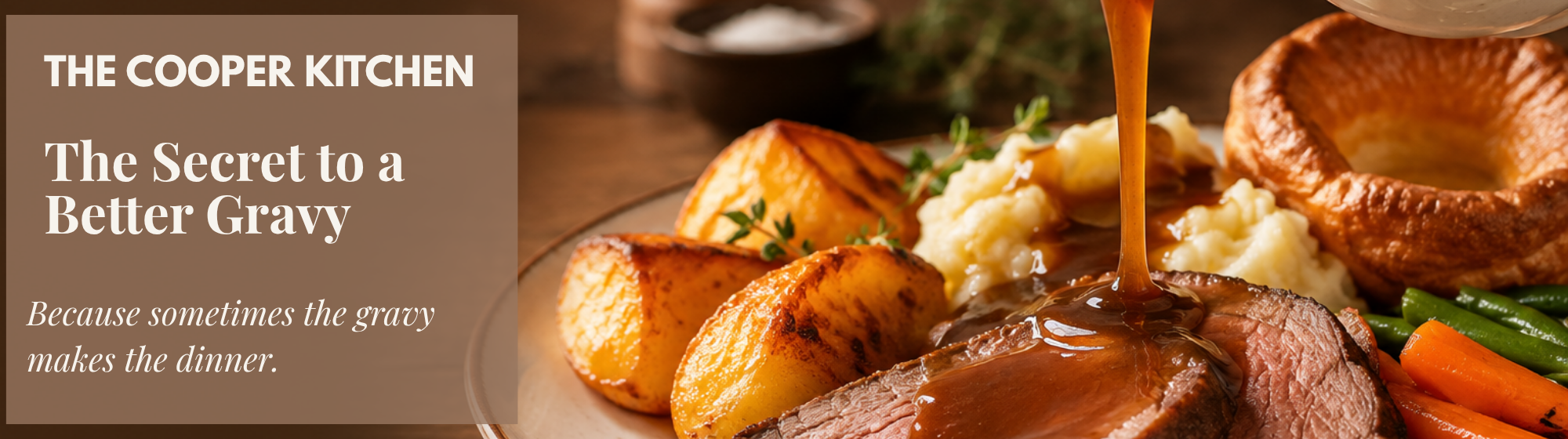
The Secret to a Better Gravy
Because sometimes the gravy makes the dinner.
It Starts in the Roasting Tin
There are some parts of a roast dinner people are willing to compromise on. Gravy usually isn’t one of them. Too thin, too thick, not enough of it — everyone seems to have an opinion.
But really good gravy doesn’t have to be complicated, and some of its best flavour is already sitting right in front of you when the roast comes out of the oven.
Those meat juices, browned bits stuck to the bottom of the roasting tin and vegetables that have been cooking underneath the joint are packed with flavour. Rather than washing them away, they should be the starting point.
Onions, carrots, garlic and a few herbs added around or underneath the meat while it roasts will give you even more to work with. By the time the joint comes out to rest, you’ve already done much of the hard work without really thinking about it.
From there, making better gravy is mostly about knowing what to keep, what to add and how to bring all those flavours together.
This week in The Cooper Kitchen, we’re doing exactly that — and hopefully putting an end to disappointing gravy for good.
Fat, Juices & Flavour
When the meat comes out of the roasting tin, what’s left behind will usually be a mixture of cooking juices, rendered fat and all those lovely browned bits from the meat and vegetables.
The trick is not to simply tip everything into the gravy.
If there’s a lot of fat sitting on top, carefully spoon some of it off — but don’t be too enthusiastic. A little fat carries plenty of flavour and can also be useful if you’re adding flour to thicken the gravy.
Underneath is the good stuff: the concentrated meat juices and browned bits that have collected during roasting. That’s where a lot of the proper meaty flavour in your gravy comes from.
And don’t worry if the bottom of the tin looks a little messy. Provided those bits are deeply browned rather than burnt, that’s exactly where some of your best flavour is hiding.
The next job is getting all that flavour off the bottom of the tin and into the gravy. That’s where deglazing comes in — a cooking term that sounds much fancier than it really is.
Deglazing — The Bit Worth Knowing
Deglazing simply means adding liquid to the hot roasting tin and using it to lift all those browned, flavour-packed bits from the bottom.
Once the meat has been removed to rest and you’ve spooned away any excess fat, put the roasting tin over a gentle heat if it’s suitable for the hob. Add a splash of stock and, as it begins to bubble, scrape the bottom of the tin with a wooden spoon.
Almost immediately, everything that looked stuck to the tin starts becoming part of your gravy.
Stock is the easiest choice, but it isn’t the only one. Red wine works beautifully with beef, cider is a natural partner for pork, while chicken and lamb can both benefit from a splash of wine or simply a good-quality stock.
If your roasting tin can’t be used directly on the hob, don’t worry. Add a little hot stock to the tin, scrape up the flavours and pour everything into a saucepan instead.
One important rule: if anything in the roasting tin has actually burnt rather than browned, leave it behind. Brown adds flavour. Black adds bitterness.
Getting the Consistency Right
Everyone has their own preference when it comes to gravy, but generally you’re looking for something with enough body to coat the back of a spoon without becoming so thick that it sits on the plate like a sauce.
If your gravy is too thin, sometimes all it needs is a little patience. Let it simmer gently, uncovered, and as some of the liquid evaporates the flavour will concentrate and the gravy will naturally thicken.
For a little more help, flour can be cooked with some of the fat from the roasting tin before the liquid is gradually whisked in. Alternatively, a small amount of cornflour mixed with cold water first can be whisked into simmering gravy. Never add dry cornflour straight to the pan unless you fancy chasing lumps around with a whisk.
If the gravy becomes too thick, the answer is much easier — gradually add a little more hot stock until you reach the consistency you want.
Whatever method you use, add things gradually. It’s much easier to thicken gravy a little more than it is to rescue one that has suddenly become far too thick.
And before it reaches the table, always have a taste. A little salt or black pepper might be all it needs — but sometimes the flavour can be taken in a completely different direction depending on what you’ve roasted.
Matching the Gravy to the Meat
Once you’ve got the basic gravy right, you can start adding flavours that work with whatever you’ve cooked.
Beef can take a rich gravy. Beef stock is the obvious base, with a splash of red wine if you have some open. A little mustard or Worcestershire sauce can add extra depth too.
Lamb works beautifully with a good stock and the flavours it naturally loves — rosemary, garlic and perhaps a little red wine. Keep it simple enough that the flavour of the lamb still comes through.
Pork pairs particularly well with cider or apple juice. Add either to the roasting tin as you deglaze, then combine with stock for a gravy with a subtle sweetness that works brilliantly with the pork.
Chicken lends itself to a slightly lighter gravy. Chicken stock, thyme and the juices from the roasting tin are often all you need. A small squeeze of lemon at the very end can brighten everything up too.
None of these are hard-and-fast rules. They’re simply starting points. Taste as you go — your gravy should suit your dinner and, more importantly, how you like it.
And if you’re not sure what will work with the joint you’ve chosen, ask your butcher. It’s exactly the sort of thing we’re happy to help with.
And if your usual starting point comes from a tub of gravy granules rather than a roasting tin? That’s absolutely fine too.
Yes, You Can Use Gravy Granules
Let’s clear something up: there’s absolutely nothing wrong with using gravy granules.
Making gravy entirely from scratch is satisfying, but Sunday dinner doesn’t need to become a cooking competition. A good tub of granules can be useful — and there are a few easy ways to make them taste much better.
Instead of making them with water alone, start with the juices from your roasting tin and add some good stock. Scrape up those browned bits, bring everything together in a saucepan and then use the granules gradually to help thicken and finish the gravy.
You can still add flavours to suit the meat: a little red wine with beef, cider with pork, rosemary with lamb or thyme with chicken.
The result is somewhere between completely homemade and straight-from-the-tub gravy — with very little extra work and a lot more flavour.
The important thing isn’t whether you used flour, cornflour or gravy granules. It’s whether everyone around the table wants another spoonful.
Try It This Way: Proper Pan Gravy
A simple pan gravy is one of those recipes worth knowing because the basic method works whether you’ve roasted beef, lamb, pork or chicken.
Makes enough for around 4–6 people
You’ll need:
- Juices and browned bits from your roasting tin
- 1–2 tbsp of the fat from the roast
- 1 tbsp plain flour
- Around 500ml hot stock, matched to the meat
- Salt and black pepper
- An optional splash of wine, cider or other flavouring to suit your roast
Method:
Once the meat has been removed to rest, carefully spoon away most of the excess fat from the roasting tin, keeping around a tablespoon or two behind.
Place the tin over a gentle heat if suitable for the hob. Stir in the flour and cook for a minute or two, scraping up all those browned bits as you go.
Gradually add the hot stock, a little at a time, whisking or stirring continuously so everything comes together smoothly.
If you’re adding wine or cider, pour in a small splash and allow the gravy to bubble gently. Simmer for 5–10 minutes, or a little longer if needed, until it has reduced to the consistency you like.
Taste before adding any salt — the roasting juices and stock may already have provided plenty. Add black pepper and any final seasoning you think it needs.
For a smoother gravy, pour it through a sieve into a warm jug. Prefer yours with all the little roasted bits left in? Keep them in.
Then there’s only one question left:
Who gets to pour the gravy?
The Bit That Brings It All Together
Gravy might technically be an accompaniment, but on a good roast dinner it can feel like the thing that brings everything else together.
It catches the flavour from the meat, finds its way into the mash, fills the Yorkshire pudding and inevitably ends up being poured over far more of the plate than originally intended.
And making it better doesn’t require complicated techniques or a cupboard full of ingredients. Keep those roasting juices, make use of the browned bits in the tin, add a good stock, taste as you go and don’t be afraid to take a shortcut when you need one.
Whether yours is completely homemade, helped along with a few gravy granules, thick enough to stand a spoon in or you’re just very generous with the pouring — the important thing is that it tastes good.
Because sometimes, the gravy really does make the dinner.