Slow Cooking: Why Time Does the Work
Why Some Meat Needs Time
There’s something particularly satisfying about slow cooking.
A pot goes into the oven with meat, vegetables, stock and a few simple ingredients. A few hours later, the kitchen smells brilliant and a cut of meat that started off firm can be tender enough to pull apart with a fork.
But slow cooking isn’t simply about cooking something for longer. It starts with choosing the right cut.
Some cuts naturally do more work on the animal and contain more connective tissue. Cook them quickly and they can be firm or chewy. Give them gentle heat and plenty of time, though, and they’re transformed.
That’s why some of the cuts that don’t necessarily look the most tender in the butcher’s counter can produce some of the best slow-cooked dinners. And there’s another advantage: these cuts are often packed with flavour.
So before reaching automatically for the most expensive piece of meat, it’s worth thinking about how you plan to cook it.
Sometimes the cut that needs a little more time gives you far more back in return.
What Actually Happens During Slow Cooking?
There is a bit of science behind it, but thankfully you don’t need a chemistry lesson to make a good casserole.
Hard-working cuts of meat contain collagen, one of the things that helps hold the muscles together. When cooked gently for long enough, that collagen gradually breaks down and turns into gelatin.
That’s what helps give slow-cooked meat that soft, tender texture and gives the cooking liquid its lovely richness and body.
The important bit is time.
Turn the temperature up too high in an attempt to hurry things along and you won’t necessarily get the same result. The meat needs enough time at a gentle temperature for those tougher fibres and connective tissues to soften.
It also explains why a casserole can sometimes seem nowhere near ready after a couple of hours, then become beautifully tender later on.
If a slow-cooking cut is still tough, quite often it simply isn’t finished yet.
The Cuts Made for It
This is where choosing the right meat really matters.
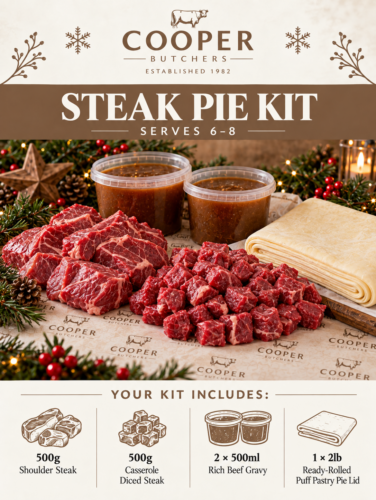
For beef, shin is one of the classics. It starts off firm but becomes beautifully tender with long, gentle cooking and gives plenty of richness to the gravy. Chuck, braising steak and brisket are also excellent choices.
Then there’s oxtail. It needs patience, but there’s a reason it has been used in soups and stews for generations. Cooked properly, it produces incredibly rich meat and gravy.
With lamb, shoulder and shanks are made for slower cooking. Both have plenty of flavour and respond brilliantly to several hours of gentle heat.
For pork, shoulder is an obvious choice, but don’t overlook pork collar. It has enough fat running through it to stay succulent during a long cook and works particularly well in casseroles, braises and pulled-pork-style dishes.
These aren’t second-best cuts that need slow cooking because there’s nothing else you can do with them. Slow cooking is what allows them to show you exactly how good they are.
If you’re ever unsure what cut will suit the dish you’re planning, ask us. Tell us what you’re making and how you’re cooking it — that’s often more useful than simply asking for a particular cut by name.
Low & Slow Doesn’t Mean Dry
It sounds slightly backwards, but meat can still dry out during slow cooking.
The aim isn’t to drown everything in liquid, though. In most casseroles and braises, you want enough stock, gravy or sauce to keep things moist while still allowing the flavours to become concentrated.
A tightly fitting lid helps enormously. It keeps moisture inside the pot rather than allowing it all to disappear into the oven.
Temperature matters too. A gentle oven gives the meat time to soften without everything boiling furiously around it.
And don’t panic if the meat isn’t completely submerged. With a covered casserole or braise, that’s often perfectly fine. You can turn larger pieces during cooking if needed.
One of the most common mistakes is actually adding too much liquid. Meat and vegetables release moisture as they cook, so a pot that looks slightly short of liquid at the beginning can look very different a couple of hours later.
Start sensibly. You can always add a little more.
Build the Flavour Before You Leave It Alone
Slow cooking might do most of the work for you, but ten minutes at the beginning can make a big difference to what comes out at the end.
Browning the meat in batches gives you extra roasted flavour. Don’t crowd everything into the pan at once — if the meat starts releasing lots of water, you’ll end up steaming it rather than browning it.
Once the meat is out, onions, carrots, celery or whatever vegetables you’re using can go into the same pan.
Then comes the best bit: all those browned bits stuck to the bottom.
As we discovered in our gravy article, that’s flavour you don’t want to leave behind. Add your stock, wine, ale or other cooking liquid and scrape it all into the sauce.
Does that mean dinner will be ruined if you put everything straight into the slow cooker before work? Absolutely not.
But if you have the extra few minutes, browning first is worth doing.
Oven, Hob or Slow Cooker?
All three can make an excellent slow-cooked dinner. They simply get there slightly differently.
A slow cooker is brilliant for convenience. Put dinner on in the morning and it can quietly look after itself while you get on with the rest of the day. Because very little moisture escapes, you’ll usually need less liquid than you would in an oven casserole.
The oven gives you a little more control and is particularly good for casseroles and braises. A heavy casserole dish with a good lid is ideal.
Cooking slowly on the hob works too, provided you can maintain a very gentle simmer. You don’t want the pot boiling away furiously for hours, and it needs a little more attention than the other methods.
Whichever you choose, the principle is the same: gentle heat + the right cut + enough time.
You don’t need fancy equipment. You just need to resist the temptation to rush it.
And Stop Lifting the Lid!
We know. You only want to check it.
Then twenty minutes later, you want to check it again.
Every time you lift the lid, though, you’re letting heat and steam escape — particularly from a slow cooker. Have a little faith and leave dinner alone to do its thing.
There are a few other common slow-cooking mistakes worth avoiding too.
Don’t automatically cover everything with stock. Don’t cut the meat into tiny pieces that disappear after several hours. Don’t cook it on a fierce heat because dinner is running late.
And most importantly, don’t decide the meat is tough and therefore overcooked too early.
With the right slow-cooking cut, toughness can actually mean the opposite: it may simply need longer.
Give it another little while and check again.
Slow cooking rewards patience — which admittedly isn’t much help when everyone keeps asking when dinner will be ready.
What About the Leftovers?
This is one of the bonuses of cooking this way.
A casserole or braise often develops even more flavour after a night in the fridge, making it perfect for cooking ahead.
Leftover beef can become the filling for a pie, be spooned over a baked potato or served with fresh mash. Pulled pork can go into rolls, wraps or loaded potatoes, while leftover lamb is brilliant with couscous, flatbreads or simply reheated with the remaining gravy.
Whatever you’re keeping, cool it promptly, refrigerate it and reheat it thoroughly before serving.
And if you’ve deliberately made a larger batch, portioning some for the freezer means there’s a proper dinner waiting for another day with very little work.
Although in some houses, having enough left for tomorrow is the difficult part.
Let Time Do the Work
Slow cooking is a good reminder that tenderness isn’t simply about buying the most expensive cut of meat.
Some cuts need a little more understanding and a lot more time — but that’s exactly what makes them so good.
Choose a cut suited to slow cooking, build some flavour at the beginning, keep the heat gentle and then leave it alone.
No complicated techniques. No constant attention.
Just good ingredients and enough time to let them do what they do best.
Because every now and again, the best thing you can do with dinner is stop interfering with it.