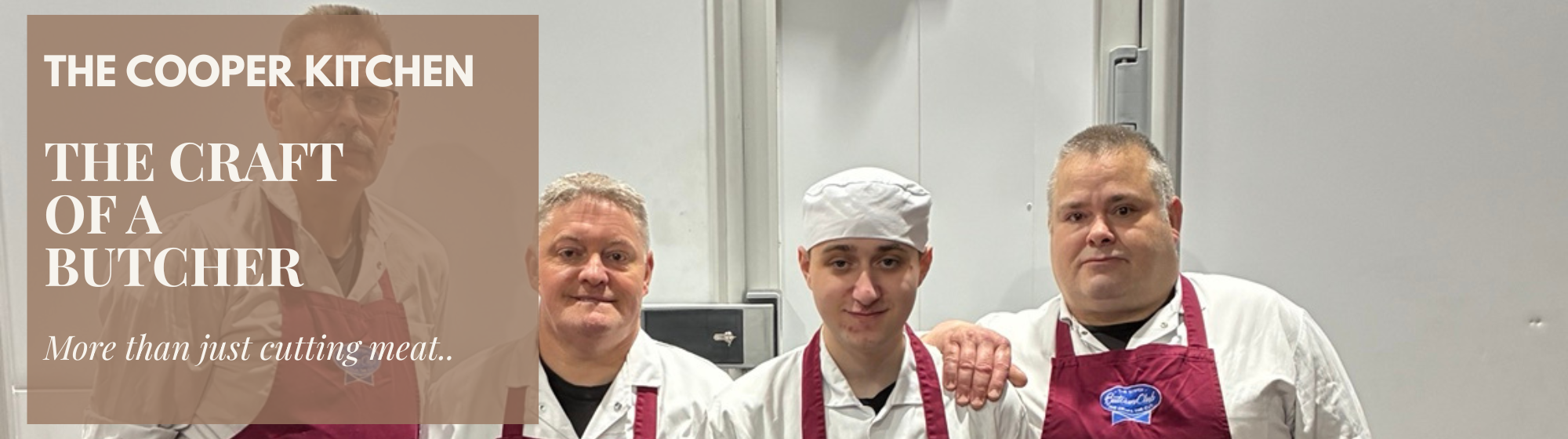
The Craft of a Butcher
More than just cutting meat.
When most people think of a butcher, they picture someone standing behind a counter, preparing steaks, weighing mince or serving customers. While that’s certainly part of the job, it’s only a small part of what traditional butchery is really about.
Being a butcher is a skilled trade that combines craftsmanship, knowledge, precision and creativity. Every cut prepared, every sausage made and every joint tied reflects years of experience, continuous learning and genuine pride in doing the job well.
It’s a profession that has been passed down through generations, yet it continues to evolve with changing tastes, new techniques and modern ways of cooking.
Behind every traditional butcher’s counter is a craft worth celebrating.
A Craft That Never Stops Teaching
One of the biggest misconceptions about butchery is that once you’ve learned the trade, you’ve mastered it.
The reality couldn’t be more different.
The best butchers never stop learning. New products, changing customer tastes and evolving preparation techniques mean there’s always something new to discover. One day might involve developing a new sausage recipe, another experimenting with curing pork, while the next could be learning a different technique for breaking down a side of beef.
Every butcher continues to refine their skills throughout their career, learning from colleagues and developing their own techniques along the way.
Every Carcass Tells a Story
One of the greatest skills in traditional butchery is breaking down a whole carcass.
It isn’t simply about cutting meat.
It’s about understanding the anatomy of the animal, recognising where every muscle sits and knowing how each cut will perform in the kitchen.
Some muscles have worked hard throughout the animal’s life, making them ideal for slow cooking. Others remain naturally tender and are perfect for quick cooking.
Knowing where those cuts come from, how to prepare them correctly and the best way to cook them is knowledge built over years of experience.
Perhaps the most fascinating part is that no two butchers work in exactly the same way.
Ask several experienced butchers to break down the same carcass and you’ll likely see slightly different techniques. The end result is still excellent, but every butcher develops their own technique through years of practice, observation and learning from others.
That’s one of the many reasons butchery remains a true craft rather than simply a job.
Before the Shop Opens
Long before the first customer walks through the door, a butcher’s day is already well underway.
Deliveries are checked, whole carcasses are broken down, and the day’s production begins. Sausages are made, burgers prepared and traditional products carefully produced using a combination of skilled craftsmanship and specialist equipment. Ready-to-cook meals are assembled, while the counter gradually takes shape for the day ahead.
Most customers never see this side of the trade, yet it’s what makes a traditional butcher’s shop unique. There’s a real sense of satisfaction in creating something from scratch, seeing it on the counter and knowing it will become part of someone’s family meal that evening.
Did You Know?
Many traditional butchers still buy whole beef, pork and lamb carcasses at market or from local farmers before preparing every cut in-house.
This allows them to make the very best use of the whole animal, prepare a wider variety of cuts and maintain the traditional skills that have been at the heart of butchery for generations.
Keeping Traditional Skills Alive
Traditional butchery is one of the oldest food crafts in the country, but it’s also one facing an important challenge.
With the average age of many butchers now around 60, encouraging younger people into the trade has never been more important.
Apprenticeship programmes, including those delivered through Craft Skills Scotland, are helping introduce a new generation of butchers. However, some of the most valuable lessons still come from working alongside experienced colleagues every day.
Watching how someone sharpens their knives.
Learning how they prepare a carcass.
Understanding why they choose one technique over another.
These are skills that simply can’t be learned from a textbook.
At Cooper Butchers, apprentices begin by learning the foundations of production—making sausages, preparing puddings and understanding how products are made—before progressing to whole-carcass butchery as their confidence and experience grow.
It’s a journey that takes time, patience and commitment, but it’s how traditional skills continue to be passed from one generation to the next.
Tradition Meets Modern Tastes
Traditional butchery continues to evolve alongside changing lifestyles.
Today’s customers are looking for meal inspiration, ready-to-cook products and convenient solutions for busy lives, while online ordering has made independent butchers more accessible than ever.
At the same time, many traditional cuts such as liver, oxtail and bones for homemade stock or bone broth are enjoying a revival, as more people rediscover their flavour, value and nutritional benefits.
The trade may continue to evolve, but its foundations remain exactly the same.
From the Block
Andrew
“I enjoy making sausages because every batch is different, and it’s satisfying seeing something you’ve made from scratch ready for the counter.”
Jim
“I’ve been a butcher since leaving school and I still learn something new. But for me, nothing beats breaking down a side of beef.”
Scott
“I love experimenting, curing pork, creating new products and seeing what new flavours we can come up with.”
Paul
“One of the best parts of the job is talking to customers. I enjoy giving meal ideas, but I also take plenty of inspiration home from the suggestions they share with me.”
David
“A lot of my work happens behind the scenes, preparing the cooked meats that customers enjoy every day.”
Proud to Carry the Craft Forward
At Cooper Butchers, we’re proud to have a team with more than 150 years of combined butchery experience.
Every member of the team brings their own knowledge, technique and passion to the trade, while sharing one common goal—to prepare food to the highest possible standard for our customers.
Just as importantly, we’re committed to passing those skills on. By investing in apprentices, encouraging continuous learning and continuing to buy and prepare whole carcasses, we’re helping ensure that traditional butchery continues to thrive for future generations.
Because being a butcher is about far more than preparing meat.
It’s about turning skill, tradition and passion into food people trust and love.